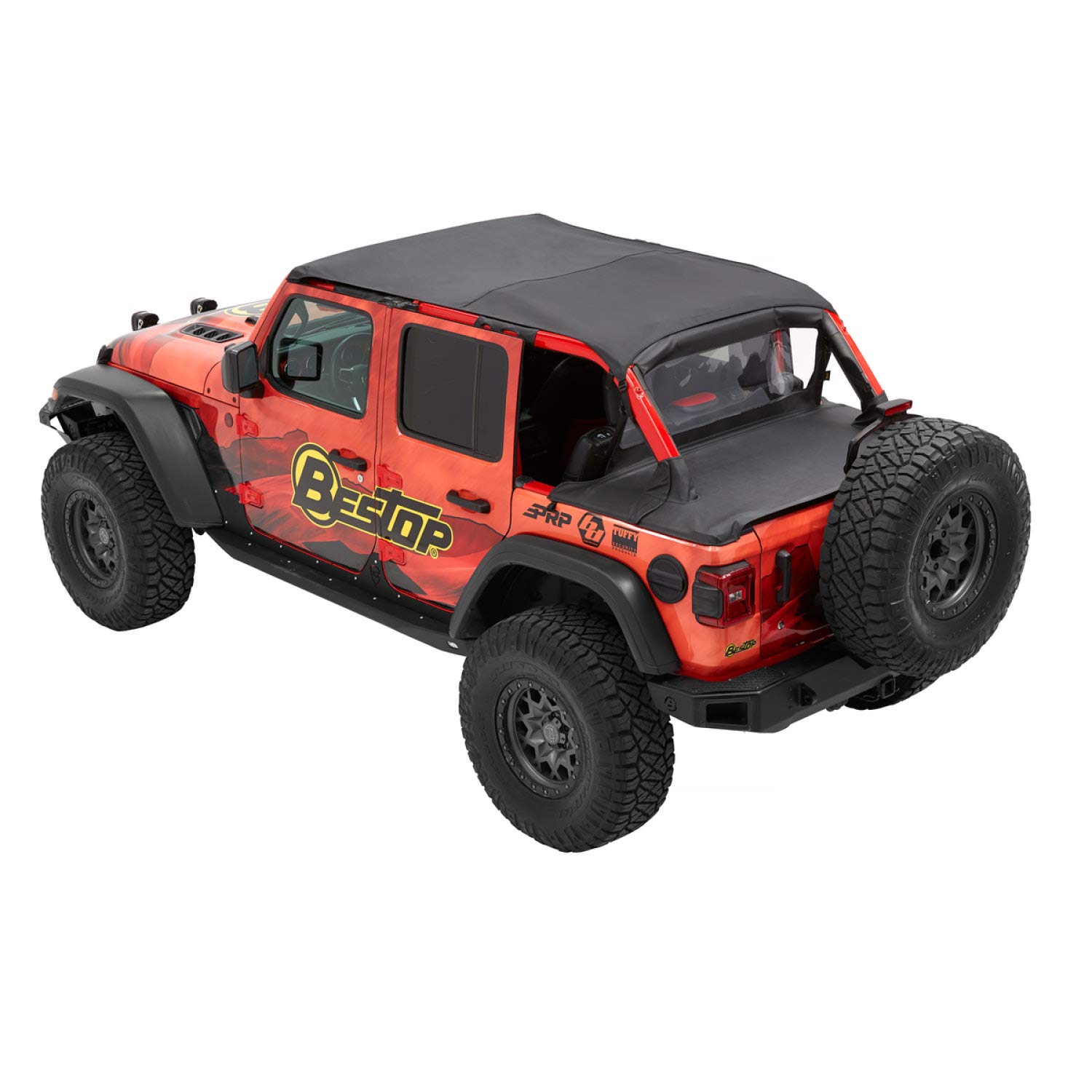
Bestop Sunrider for Hardtop
★★★★★ 4.7 (1,242)
$882.99AMAZON
Buy →Soft top versus hardtop is an old argument. Most of it assumes you're keeping the doors on — which means it's wrong for you. Once you're pulling the doors regularly, the tradeoffs shift in ways most comparisons don't cover. Here's the honest version.
The doors-off crowd tends to land in one of two camps: soft-top owners who made peace with the UV, or hardtop owners who discovered how fast a 150-lb fiberglass lid stops being fun to swap seasonally. Neither is wrong — but one fits your use case better. The answer lives below.
The standard soft-top vs. hardtop debate covers weather sealing, road noise, and break-in risk — real concerns, but all of them assume you're driving with the doors on. Swap out that assumption and the whole thing looks different.
When you go doors-off, you've already accepted open-air exposure. Wind is hitting you from both sides. Road noise is already up. The cabin isn't sealed. Which means a hardtop's main advantages — quieter interior, better weather sealing, harder to break into — matter a lot less when the door opening is just open.
That doesn't make hardtops wrong for doors-off rigs. It means the decision comes down to different factors: UV exposure and fold-back behavior, storage weight, seasonal effort, and the price delta. That's what this guide actually covers.
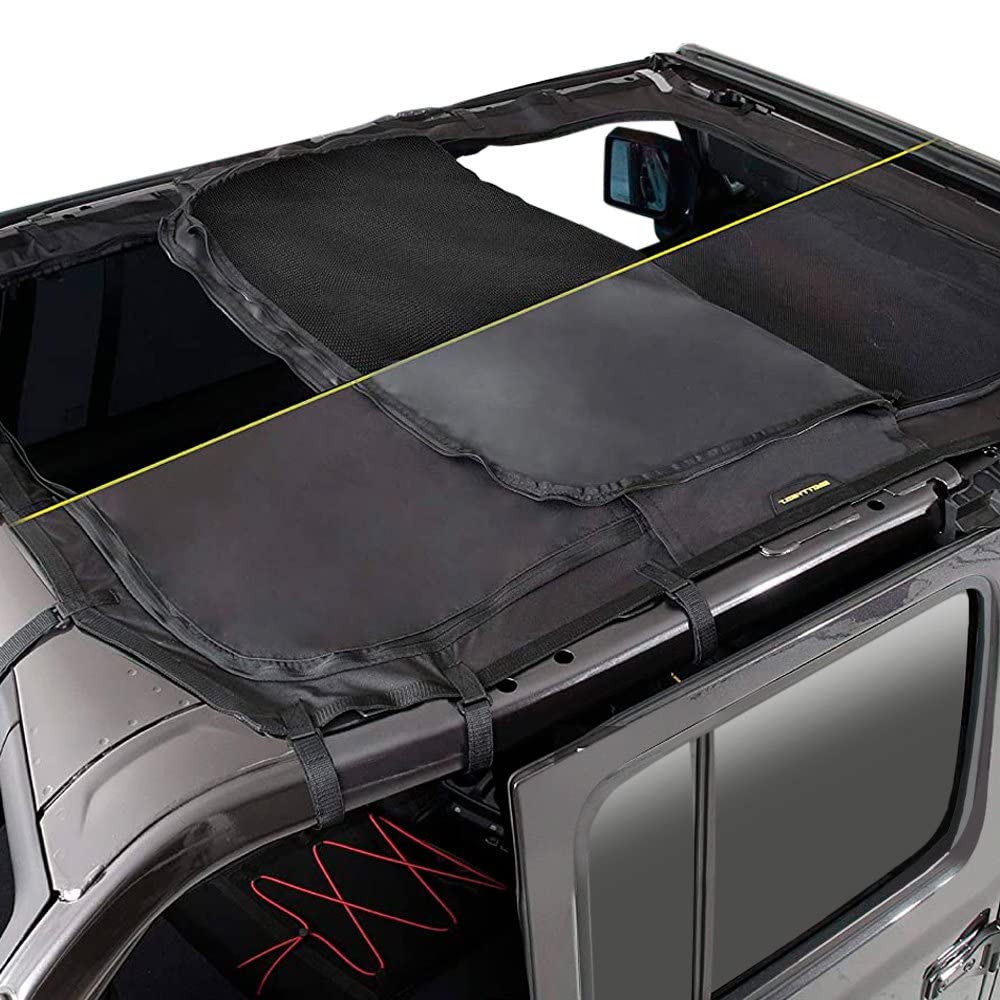
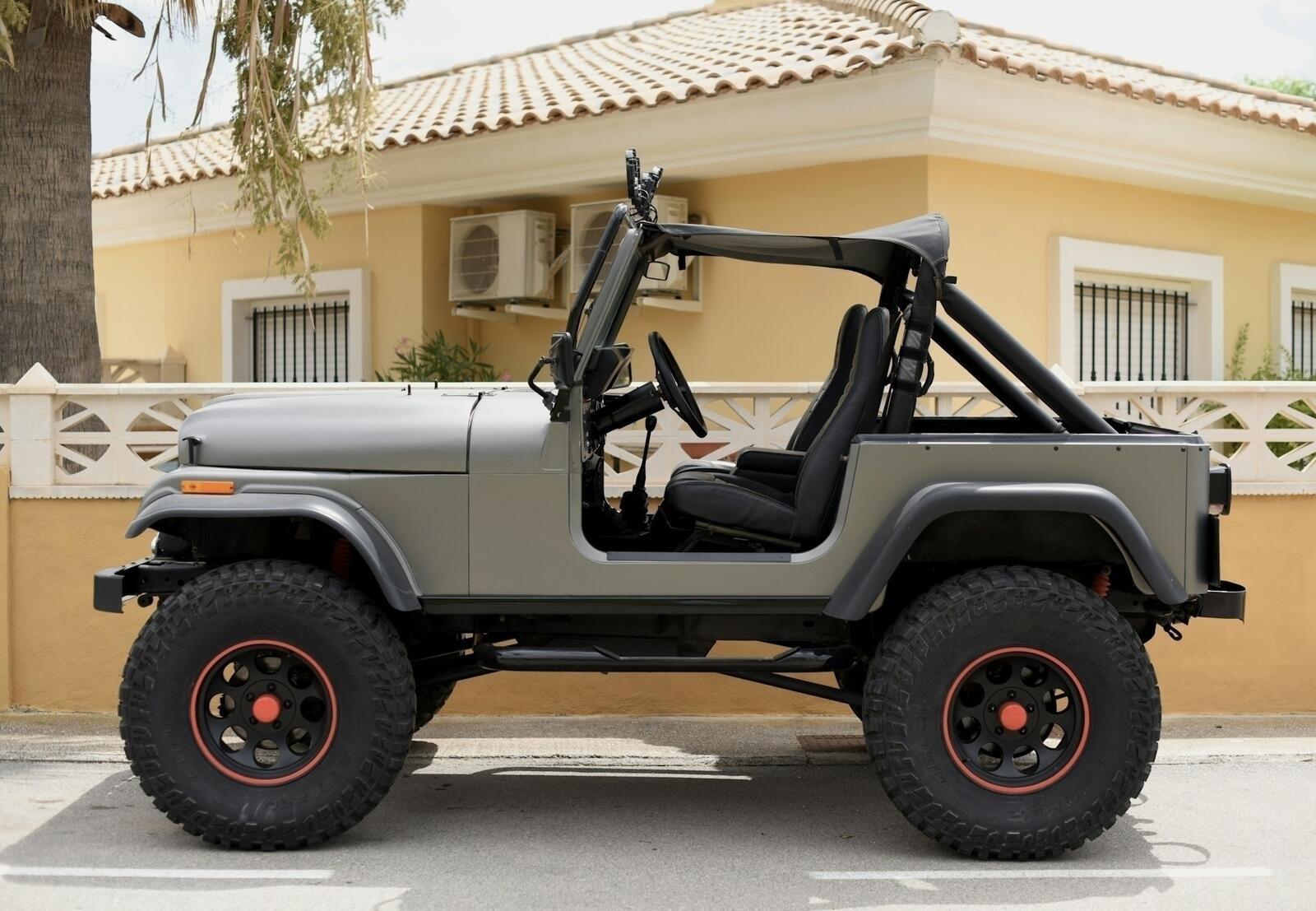
Soft tops are the dominant choice among dedicated doors-off Wrangler and Gladiator owners, and the reason is mostly operational: you can go from buttoned-up to fully open in under two minutes without removing anything from the Jeep. The top folds or stacks on itself, the doors stay in the garage, and you're moving.
Three formats worth knowing for a doors-off build:
The honest soft-top tradeoffs: fold-back designs park the stacked fabric in your cargo area or against the roll bar, which reduces usable space and can snag gear. And soft-top vinyl ages — UV cycles, heat, and repeated folding stress it faster than a hardtop just sitting there. Budget for a replacement top every 5–8 years if you're running this way regularly and plan to keep UV protectant in your kit.
Fold-back tops, shade tops, and frameless designs that make sense when you're already running without doors. Every link goes to Amazon.
A hardtop makes more sense on a doors-off build than most people give it credit for — with the right setup and the right expectations.
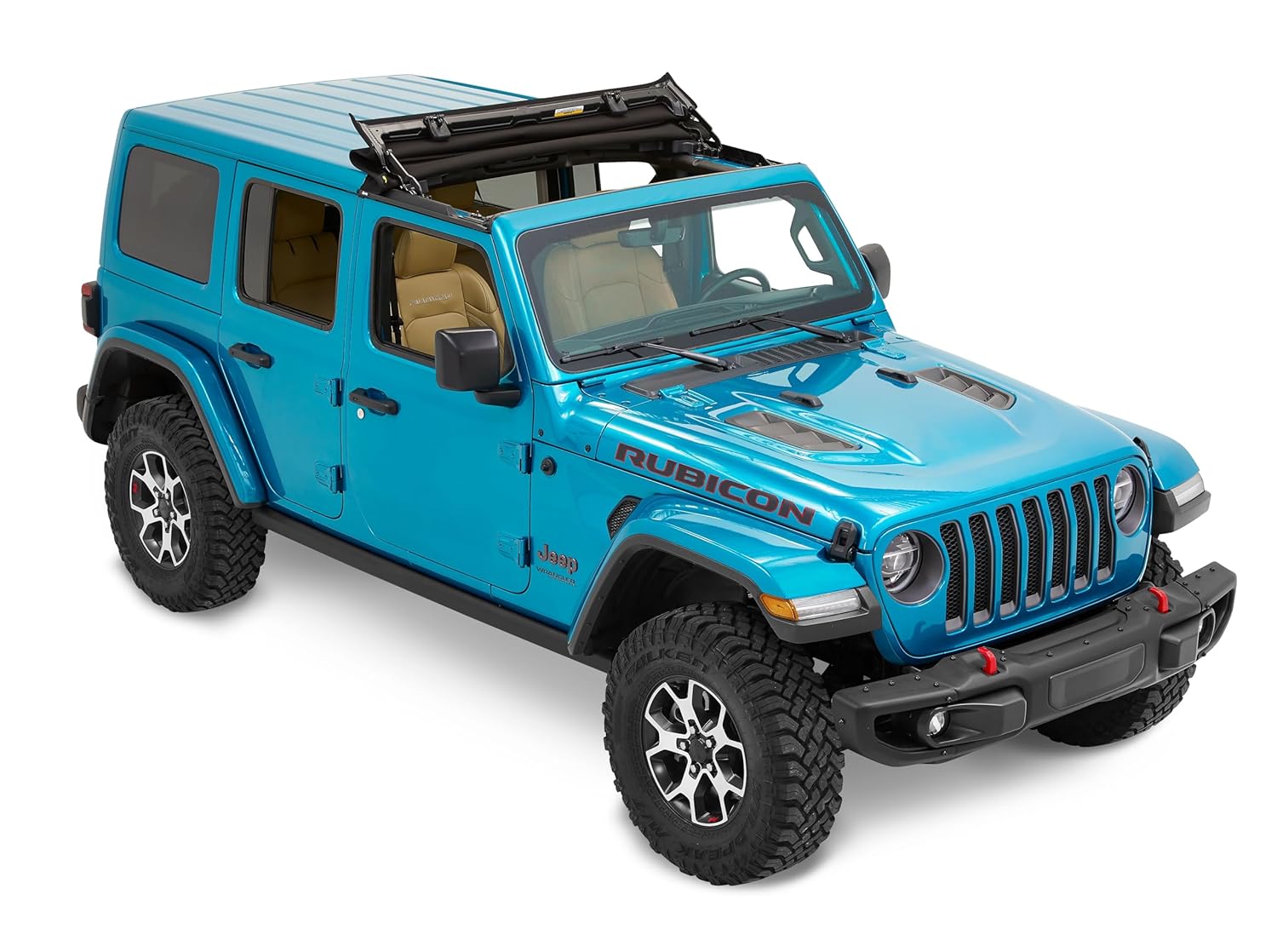
The core argument: a hardtop stays on the Jeep while you run doors-off, giving you instant and complete weather protection when you button up. No rolled fabric to unpack, no zipper-wrestling in a surprise squall. On a JL or JT with the Freedom Panel system, you remove the two front roof panels for open-air driving while the hardtop structure stays put. When the sky turns, those panels go back in within a minute. It's operationally cleaner than a fold-back soft top for trail days where weather can move fast.
Hardtops also don't have a UV aging problem. Vinyl soft tops exposed to sun cycles and repeated folding will crack and fade over time — fiberglass or SMC hardtops shrug off seasons without much more than washing and occasional wax. If you're in this Jeep for ten or more years, that's a real durability argument.
The problems appear when you want the top off the Jeep entirely — which is different from running with the Freedom Panels open. A JL two-door hardtop runs around 100 lbs. A four-door runs 130–150 lbs. Removing it alone is at minimum a two-person job, or a ceiling hoist situation. If you're seasonal about it — top comes off in May and goes back in October — that's manageable once you're set up for it. If you want to pull it by yourself on a random Saturday morning, it's not.
This is where soft-top owners on doors-off builds often underestimate the exposure. When you fold a soft top back and run without doors, you're not in a convertible — you're in a box with the lid propped up. Sun hits you from above, from both sides, and reflects up off pavement. On regular doors-off days, SPF and covering your arms aren't optional.
Wind noise comparisons between soft and hard tops mostly apply when the doors are on, where the soft top's fabric panels can flutter and the hardtop forms a solid seal. With the doors off, both configurations are equally loud — the door openings create the same turbulence regardless of what's overhead. Wind noise at highway speed on a doorless Wrangler is just the deal; top choice has almost no effect on it.
The UV equation is specific to soft tops in fold-back position. That fabric stacked near the roll bar isn't shading you, and it's sitting in full sun itself — which shortens its lifespan. If you're running doors-off forty or more days a year, track your top's condition and plan accordingly.
If you want the hardtop fully off the Jeep for summer, the storage math is unavoidable. A JL two-door hardtop is around 100 lbs; a four-door is 130–150 lbs. Getting it down solo typically means a ceiling hoist — the Harken Hoister and similar are purpose-built for this and run around $200–$400 installed. Wall mounts work too, but require dedicated garage space. It's not a dealbreaker, but it's a one-time setup cost and a real operational consideration every swap.
Soft top storage works in reverse: the top stays on the Jeep, folded. That means your interior cargo space is permanently reduced when you're running open. On a two-door, the folded stack can eat into rear seat room meaningfully. On a four-door JLU, it's less intrusive, but it's still there.
For overlanding — where you're running loaded with gear, camping kit, and recovery equipment — cargo management with a folded soft top gets tight. Rear cargo organizers and wheel-well bins help, but you're working with a constrained footprint compared to a fully open cargo area under a buttoned-up hard top.
A quality aftermarket soft top for a JL or JLU runs $400–$800 new. The Bestop Sunrider, Smittybilt Shade Top, and Rugged Ridge Voyager all land in that range. Installation is DIY-friendly and well-documented; most people handle it in an afternoon with basic tools.
A used factory JL hardtop runs $600–$1,200 depending on condition, color match, and what accessories came with it. Aftermarket hardtops (Bestop ABS, Rugged Ridge, American Racing) run $1,500–$2,500 new. Add a ceiling hoist ($200–$400) if you're doing seasonal swaps solo, plus any wall hardware or storage brackets — and the hardtop ecosystem costs two to four times more than a comparable soft-top setup to get into and maintain.
Whether that gap is worth closing depends on how you use the Jeep. If you're in a climate where the top comes off in June and goes back in September, the hardtop cost spreads over years of better winter performance and real durability. If you're pulling the top constantly or live somewhere mild enough that seasonal swaps are infrequent, the price delta is hard to justify on a doors-off-first build.
For most doors-off day-trippers — weekend trail runs, beach days, warm-weather cruising — a soft top wins. It's faster to operate, cheaper to own, and fits the rhythm of a doors-off lifestyle better. A fold-back design like the Sunrider or Voyager hits the sweet spot: open when you want, covered when you need it, and you never had to hire a buddy to lift fiberglass off a ceiling hoist.
For overlanders and four-season owners who happen to run doors-off in summer, a hardtop makes more sense. Weather protection is instant and complete when you button up. You're not managing aging vinyl. The Freedom Panel system on the JL and JT gives you real open-air driving without removing the whole structure. The weight penalty is a known cost you plan for once rather than something you fight every weekend.
The clean edge case: if you want to be truly doors-off-first and don't want to think about the top at all, a shade or bikini top is actually the simplest answer. Overhead sun coverage only, nothing to fold or manage, no panels to lose on the trail. It won't seal against anything harder than a light drizzle — but if your doors are already home, you were committed to the sky anyway.
General guidance for Wrangler and Gladiator owners — not professional automotive or safety advice. Fitment varies between JK, JL, and JT generations. Confirm compatibility with your specific model and year before purchasing.
Know which top you're running — then check the sky before you commit. The doors-off forecast calls the week so you're not guessing at the trailhead.