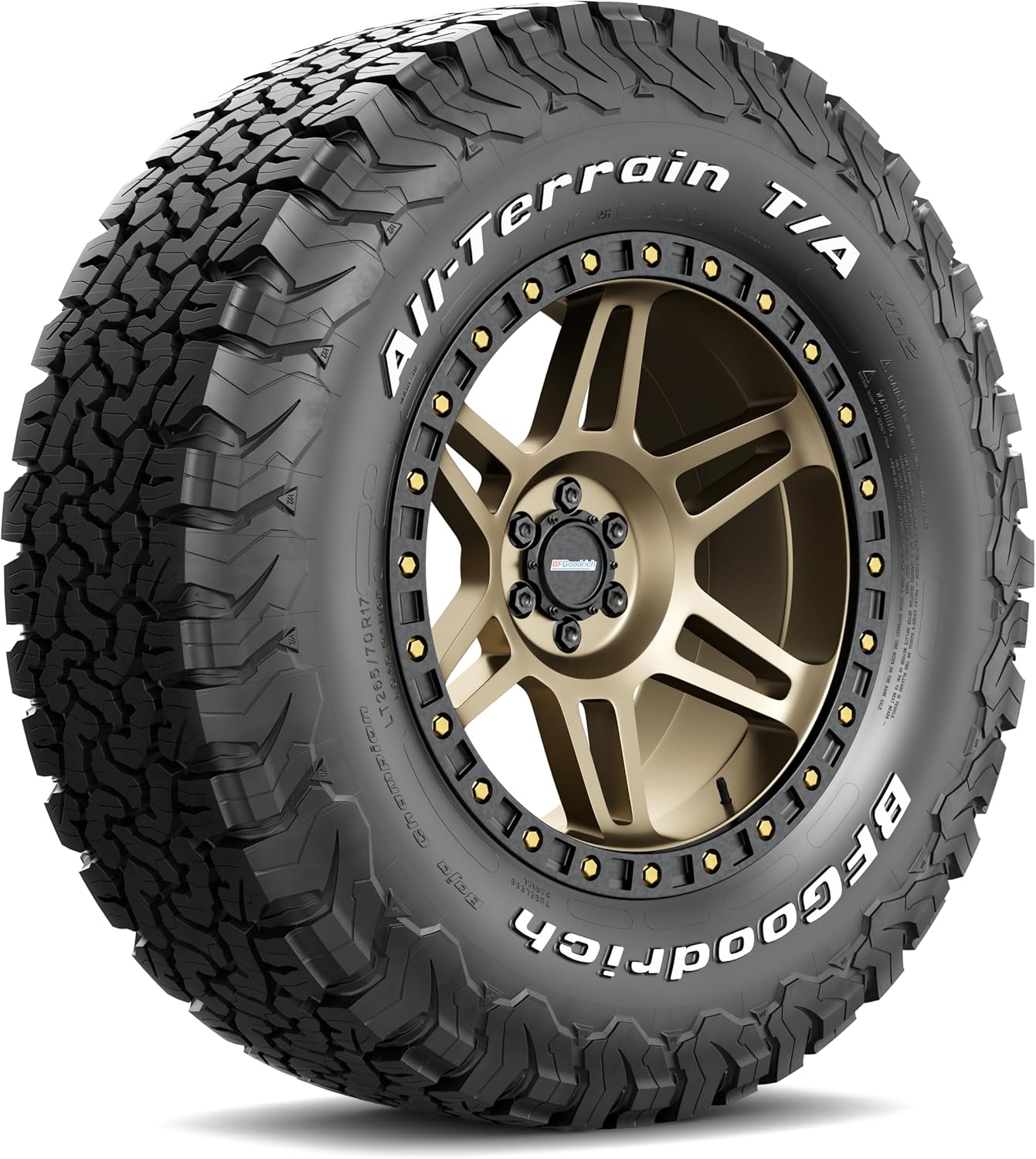
BFGoodrich All-Terrain T/A KO2, 35×12.50R17
★★★★★ 4.8 (1,286)
$402.99AMAZON
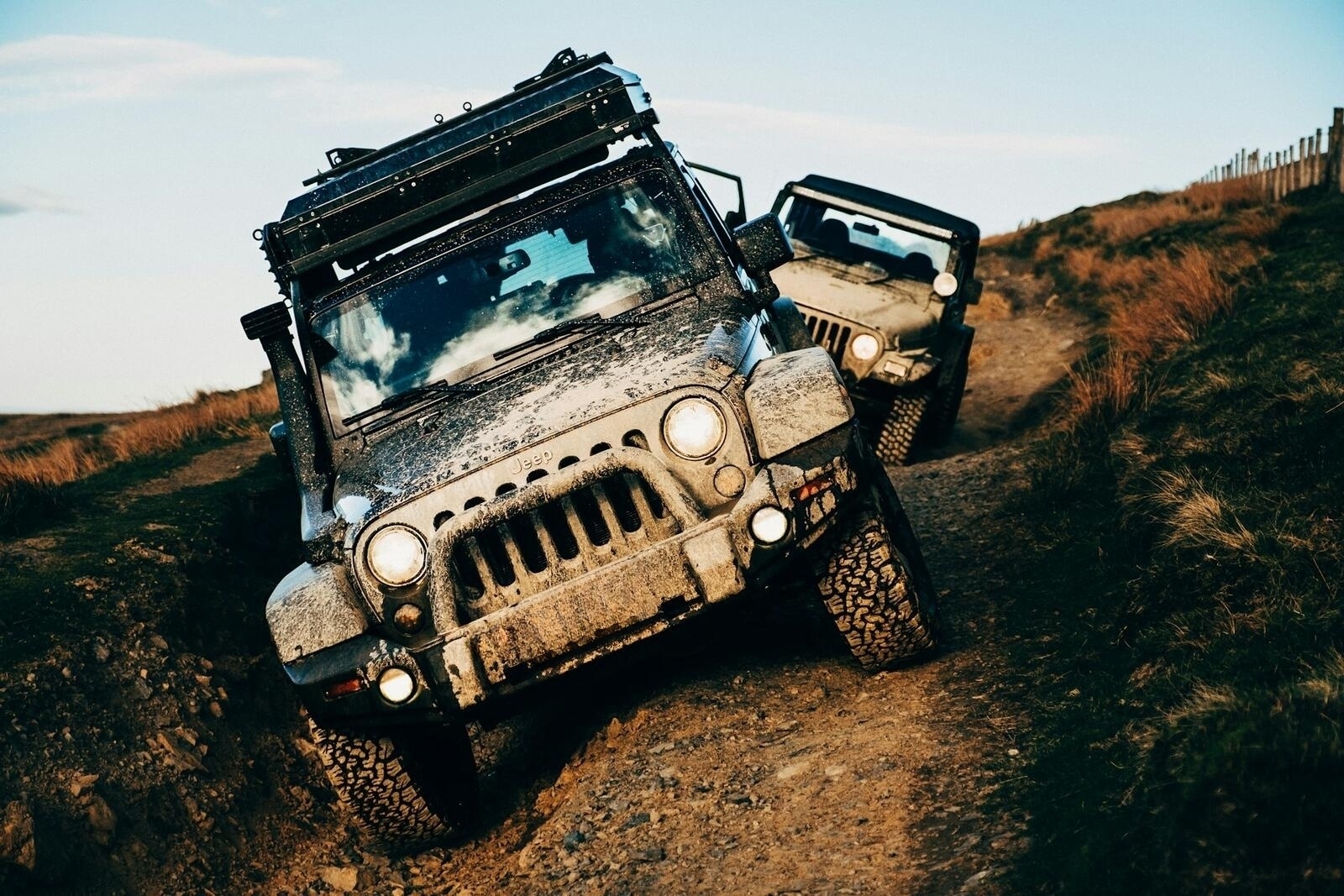
Buy →Most Jeep owners think about tires once — when they lift the rig. But the doors-off equation is different. That aggressive mud-terrain you loved on a closed-cab setup is going to drone at you all the way down the highway. Here's how to actually think about the tradeoff when your doors are in the garage and you're in the wind.
Tire choice is a different conversation when your cabin is open. Tread noise that's tolerable with doors on becomes a genuine tax on long drives without them — and the right call depends on how much of your doors-off season is highway versus trail.
On a closed-cab Jeep, the doors, weatherstripping, and door glass do real acoustic work. They don't eliminate road noise, but they buffer it — take them off and you remove that buffer entirely. Everything the tires are doing gets piped directly into the cabin. That tread drone from an aggressive mud-terrain that barely registered with doors on? Without doors, it's just there, all trip.
That's the core of the doors-off tire decision. It's not that mud-terrains are bad tires — they're excellent for what they're built to do. The experience calculus changes when you're sitting in an open cab at highway speed. The same tire that felt fine closed-cab can feel genuinely punishing doors-off.
The other thing that changes: debris. Doors keep rocks, sticks, and trail grit off your legs and the seat. Without them, anything the tires fling has a clear path into the cockpit. Aggressive treads on muddy or rocky terrain kick up more material. It's not a dealbreaker, but worth factoring in if you do a lot of trail riding doors-off with passengers.
Tread noise is the single biggest doors-off tire factor, and it's governed by one thing: void ratio — the percentage of the tread face that's open space versus rubber. Higher void ratio means the tread evacuates mud more aggressively, and it also means more noise at road speed.
The specific noise level depends on brand, compound, and your speed range. If you're running 60–70 mph doors-off most of your season, MT noise is the variable most likely to make you regret a tire choice. If 90% of your doors-off time is trail speed — under 35 mph — it matters a lot less.
All-terrain tires that keep pavement livable without giving up serious off-road capability. Every link goes to Amazon.
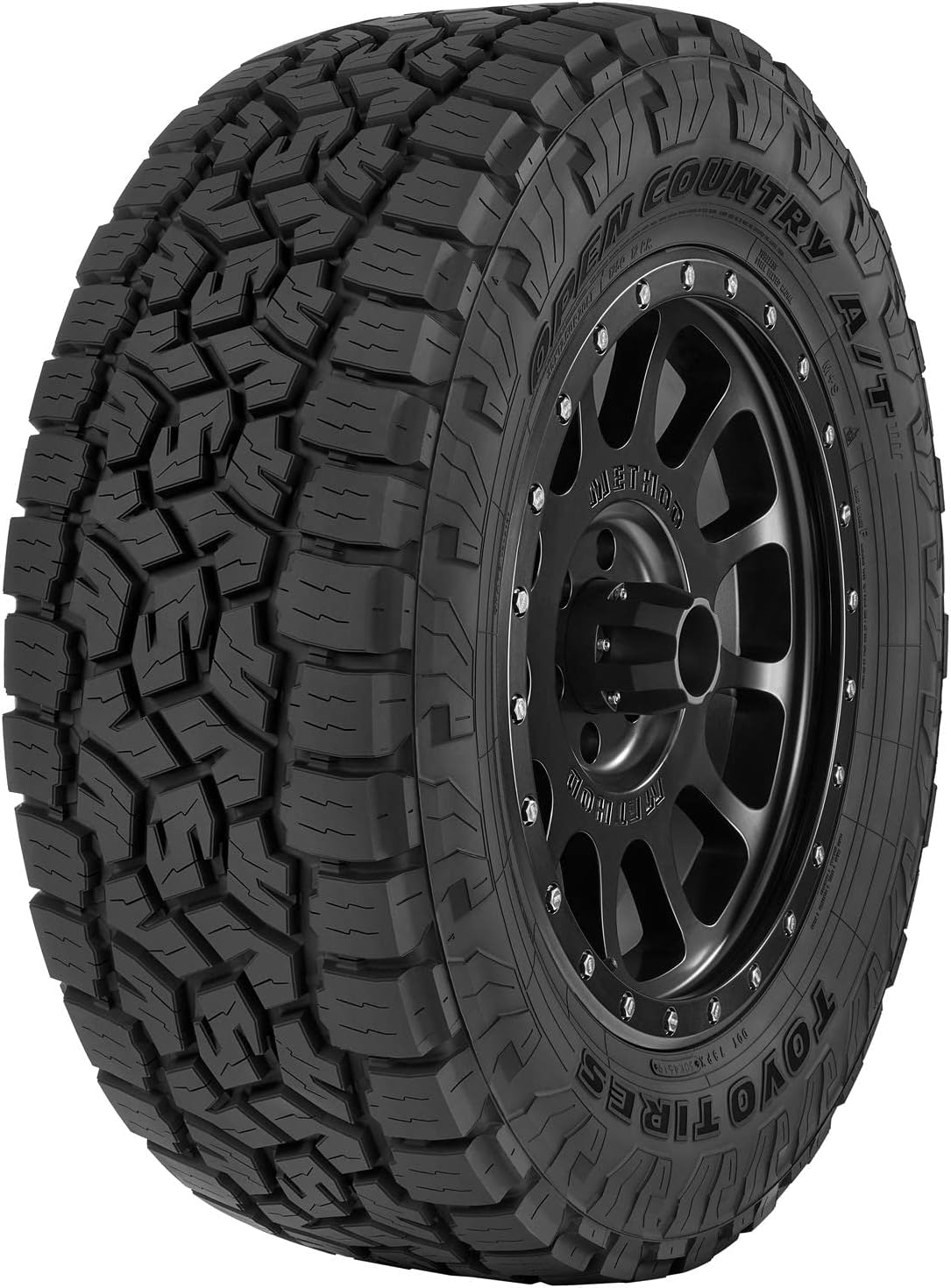
For most Jeeps that spend serious time doors-off — highway miles to the trailhead, weekend cruising, beach runs, the occasional moderate trail — all-terrain tires are the stronger play. The BFGoodrich KO2 is the benchmark: genuine off-road capability with reinforced sidewalls, solid self-cleaning tread, and a highway noise floor that's genuinely livable. It's the answer you reach for when you don't want to think about tires again for the life of the rubber.
The Toyo Open Country AT3 is the comparable alternative — slightly different tread character, strong on wet pavement, and solid mid-range trail grip. Both are available in sizes that fit JK, JL, and JT builds across common lifted sizes (35x12.50R17 and similar).
The tradeoff is honest: if you're running serious mud — deep clay, packed mud trails, water crossings — an AT is going to pack and lose traction before an MT does. The void ratio isn't there to self-clean under pressure. Know your terrain.
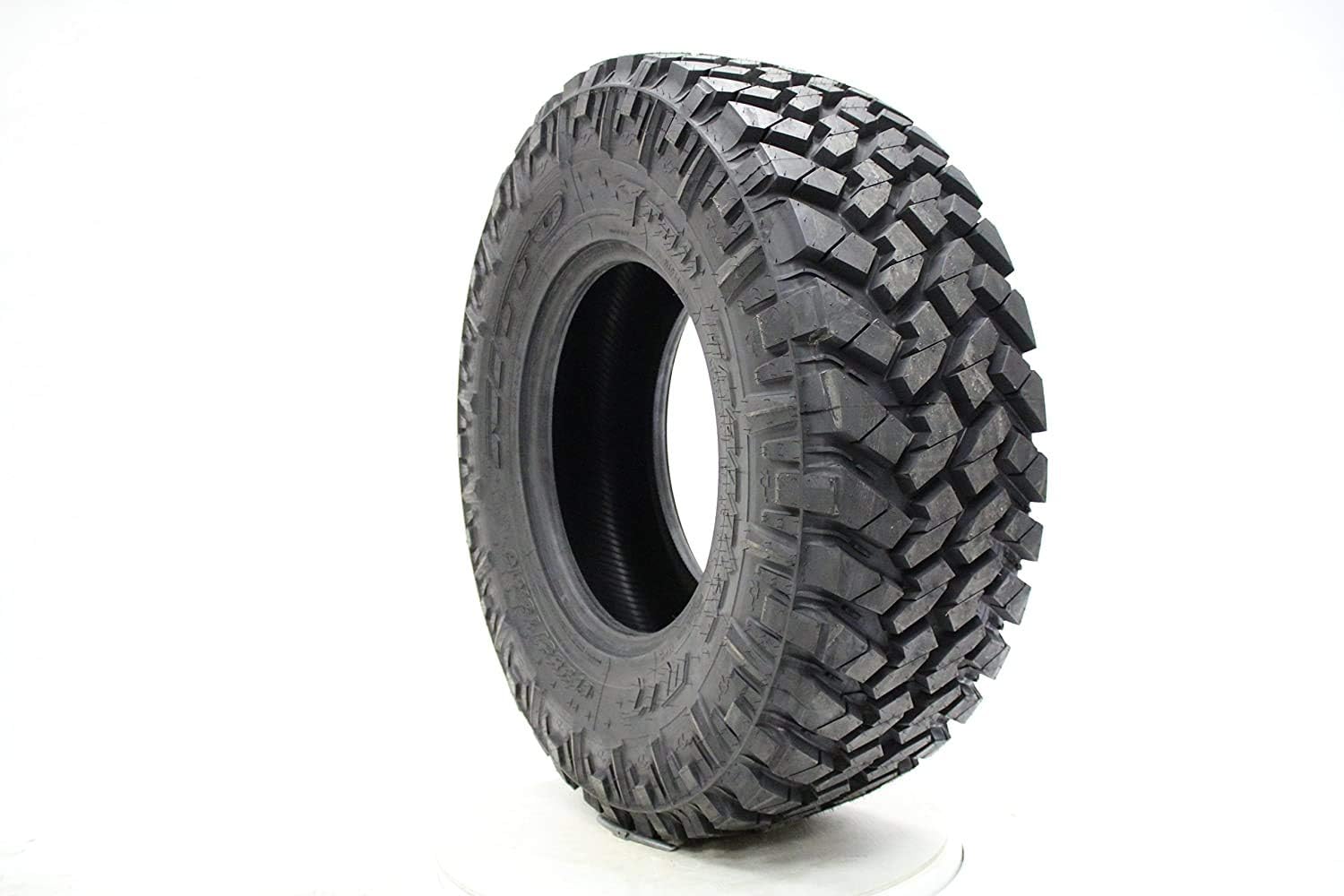
If most of your doors-off season is trail time rather than highway time — you load up Friday night, hit the trail Saturday morning, and the pavement is just logistics — a mud-terrain changes the math. The Nitto Trail Grappler is a full aggressive MT: high void ratio, serious sidewall construction, and it will go places an AT quits. The highway drone is real, but if you're spending two hours on the interstate and two days on dirt, the tradeoff tips toward the MT.
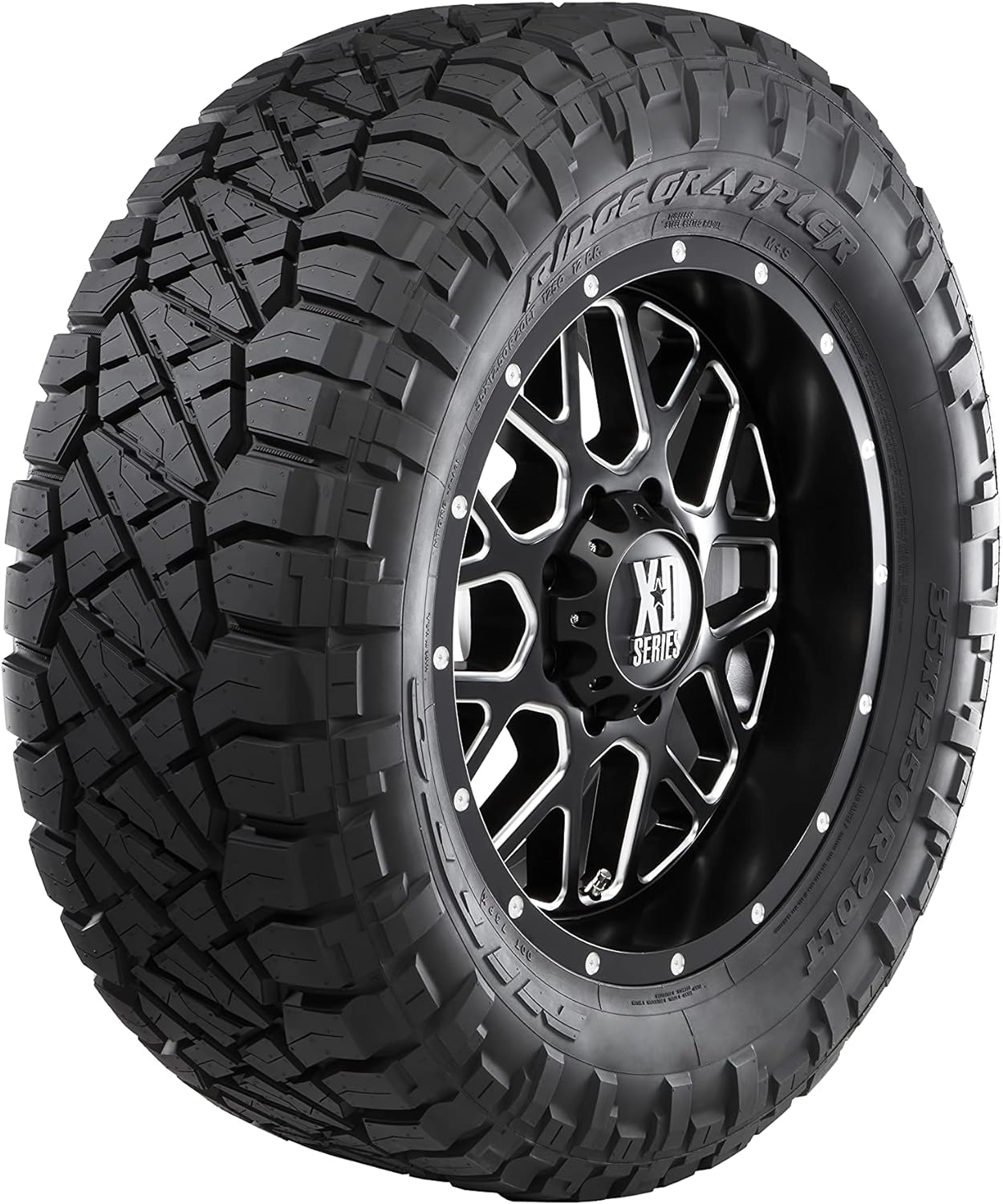
The Nitto Ridge Grappler is a hybrid that earns its positioning. More aggressive than the KO2, quieter than the Trail Grappler. If your use case genuinely splits 50/50 between serious trails and highway miles with the doors off, the Ridge Grappler is worth serious consideration. It's not the best MT and not the quietest AT, but it doesn't optimize poorly for either lane.
One thing to confirm regardless of tire type: load ratings vary by size and brand. Your Jeep has a GVWR and axle rating — the tire you mount needs a load index that meets or exceeds those numbers. This isn't a spec you can eyeball or assume. Confirm with your local shop or the manufacturer's load tables before mounting any oversized tire.
Aggressive MTs and hybrid treads for rigs that spend more time on dirt than pavement. Every link goes to Amazon.
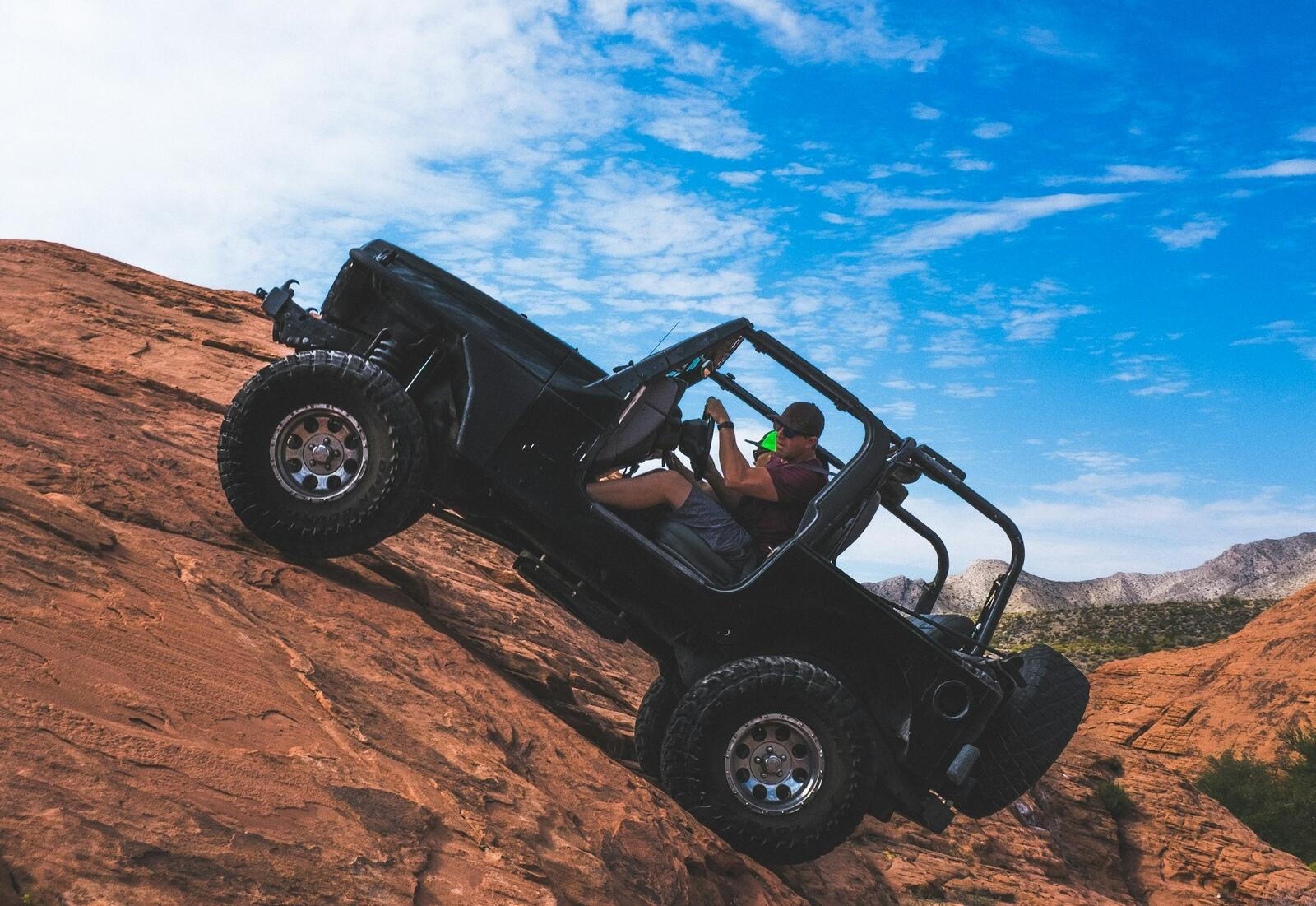
Sidewalls are the other lever. Mud-terrain tires typically run taller lugs that extend down the side — this is your protection against a sharp rock puncturing the tire when you're flexed over an obstacle. All-terrain tires are more mixed: the KO2 has reinforced sidewalls and reasonable rock protection; budget ATs tend to be thinner and more vulnerable on technical terrain.
For doors-off trail riding specifically, sidewall protection matters more than it might seem. Without the door skin as a visual reference, you lose one cue for where your tire is relative to an obstacle. Running technical rocky trails doors-off without robust sidewall construction — whether an AT with reinforced construction or a full MT — is where budget tires tend to end trips early.
Debris into the cab is a real factor too. Tires with large, aggressive lugs on muddy or loose trails kick up more material, and without doors there's nothing to stop it. It's not a safety issue, but an aggressive MT on a muddy trail will get you dirtier than an AT will. Something to weigh when you have passengers who didn't sign up for a face full of Georgia clay.
Tire weight is something people underestimate. A 35-inch mud-terrain tire can weigh 10–15 lbs more than a comparable all-terrain. Multiply by four tires and you've added 40–60 lbs of unsprung mass — weight the suspension manages without the cushion of springs and shocks above it. More unsprung mass means harsher ride, slower suspension response, and more drivetrain effort just rotating the rubber. On an open-air Jeep where you feel everything, this is noticeable.
The JK, JL, and JT handle this differently. A JL's independent front suspension doesn't absorb tire impacts the same way a JK's solid axle does. Neither tolerates significantly heavier, taller tires identically. If you're on stock suspension or a modest lift, moving to a heavy MT in a tall size can push highway manners and ride quality in a direction you won't enjoy — especially doors-off, where the open cab makes road irregularities more visceral, not less.
All-terrain tires in the same diameter tend to be lighter. Staying in a size that doesn't require regearing (typically 35s on a 2-inch lift for the JL) with an AT can meaningfully improve highway manners and fuel economy compared to an equivalent MT in the same diameter.
The honest framework: map your actual season, not your aspirational one. Not the one where every weekend is Moab — the real one. How many miles in a typical doors-off week are highway? How many are trail? What's the terrain: packed dirt and sand, or serious mud and rock?
The price gap is real — mud-terrains typically run 15–25% more than comparable all-terrains in the same diameter. That narrows when you factor in that most MTs are built tougher and can outlast budget ATs on rough terrain. It's not a decisive reason either way, but it's worth factoring in when you're on the fence between two otherwise equivalent options.
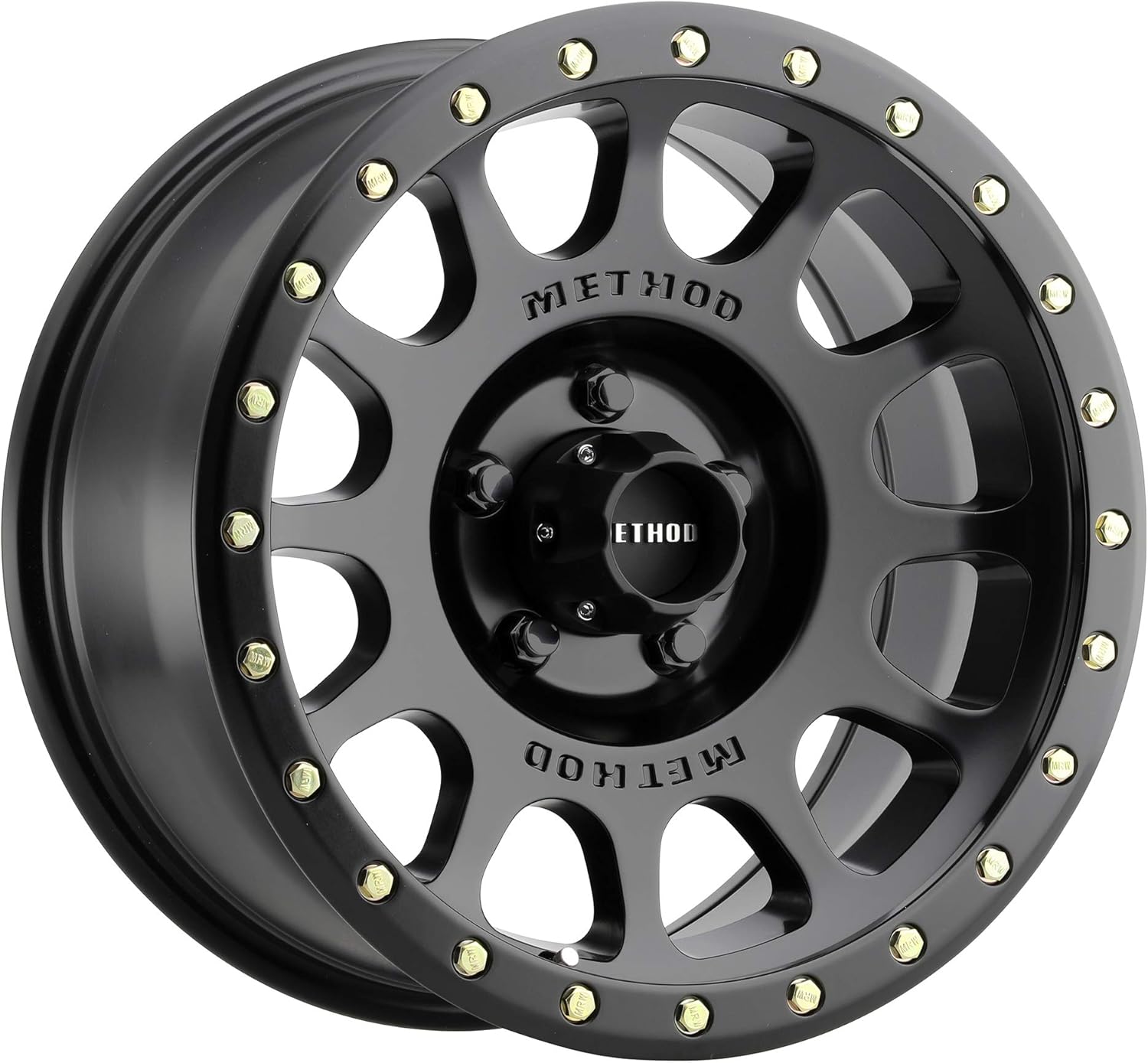
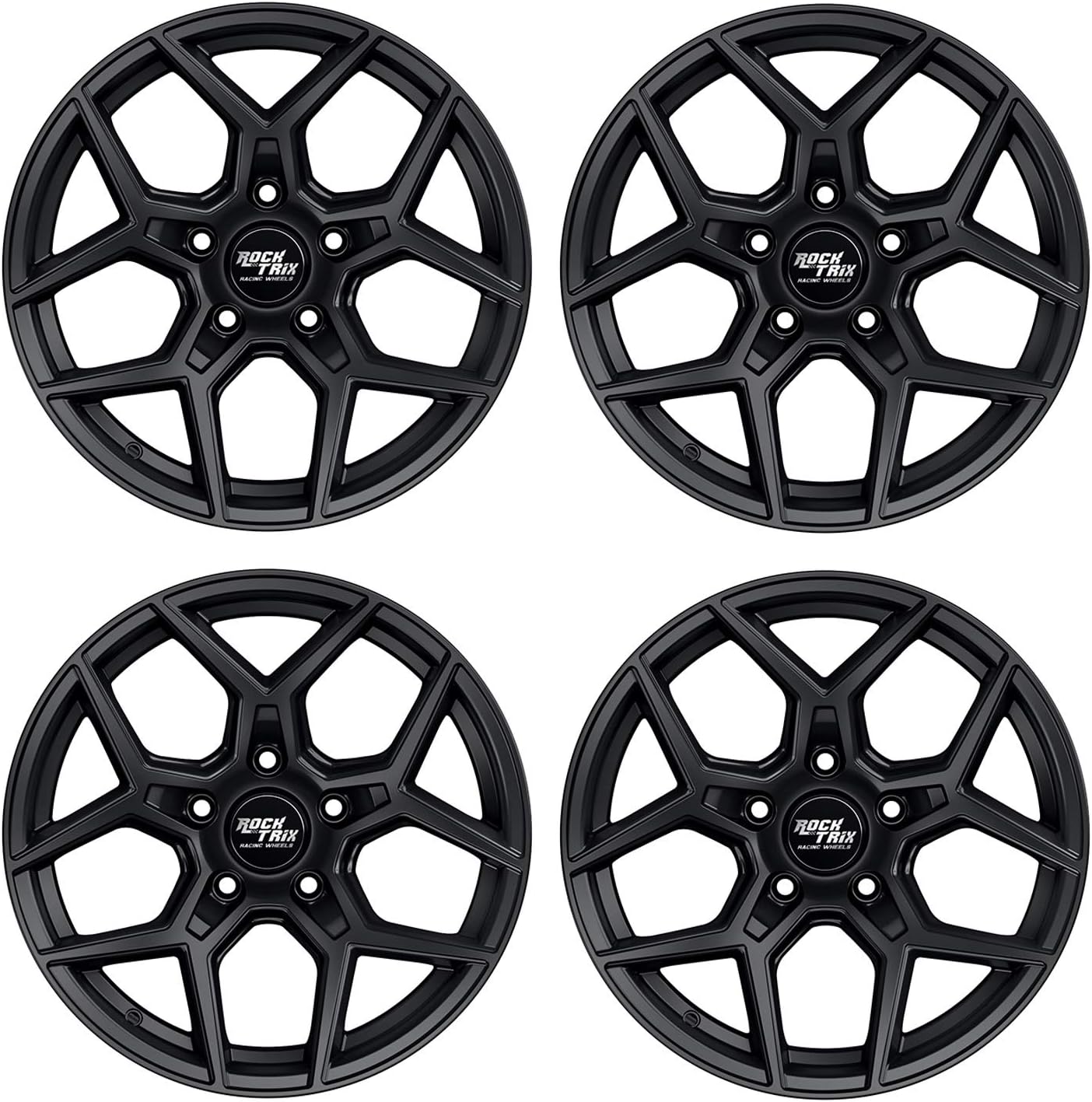
Off-road-ready wheels sized for Wrangler and Gladiator. Every link goes to Amazon.
General guidance for Jeep Wrangler and Gladiator owners, not professional engineering or legal advice. Load ratings, fitment specs, and local vehicle equipment requirements vary by application and jurisdiction — confirm with your local tire shop and your state's vehicle code before making changes.
The right tire makes the whole doors-off experience — quieter highway miles, better trail confidence, no regrets. Pick your lane, check the load ratings, and go.